Executive Summary
Israeli military operations in Lebanon have intensified despite a recently announced U.S.–Iran ceasefire, exposing critical fractures in the agreement’s scope and enforcement. Conflicting interpretations—particularly regarding whether Lebanon is included—have resulted in continued large-scale strikes, high civilian casualties, and a growing humanitarian crisis. The situation underscores the structural fragility of ceasefire frameworks in multi-actor conflicts and raises the likelihood of sustained regional instability.
Operational Overview
- Area of Operations: Beirut, Southern Lebanon, Bekaa Valley
- Actors Involved:
- Israeli Defense Forces (IDF)
- Hezbollah
- Iran (strategic backing)
- United States (ceasefire broker)
- Recent Activity:
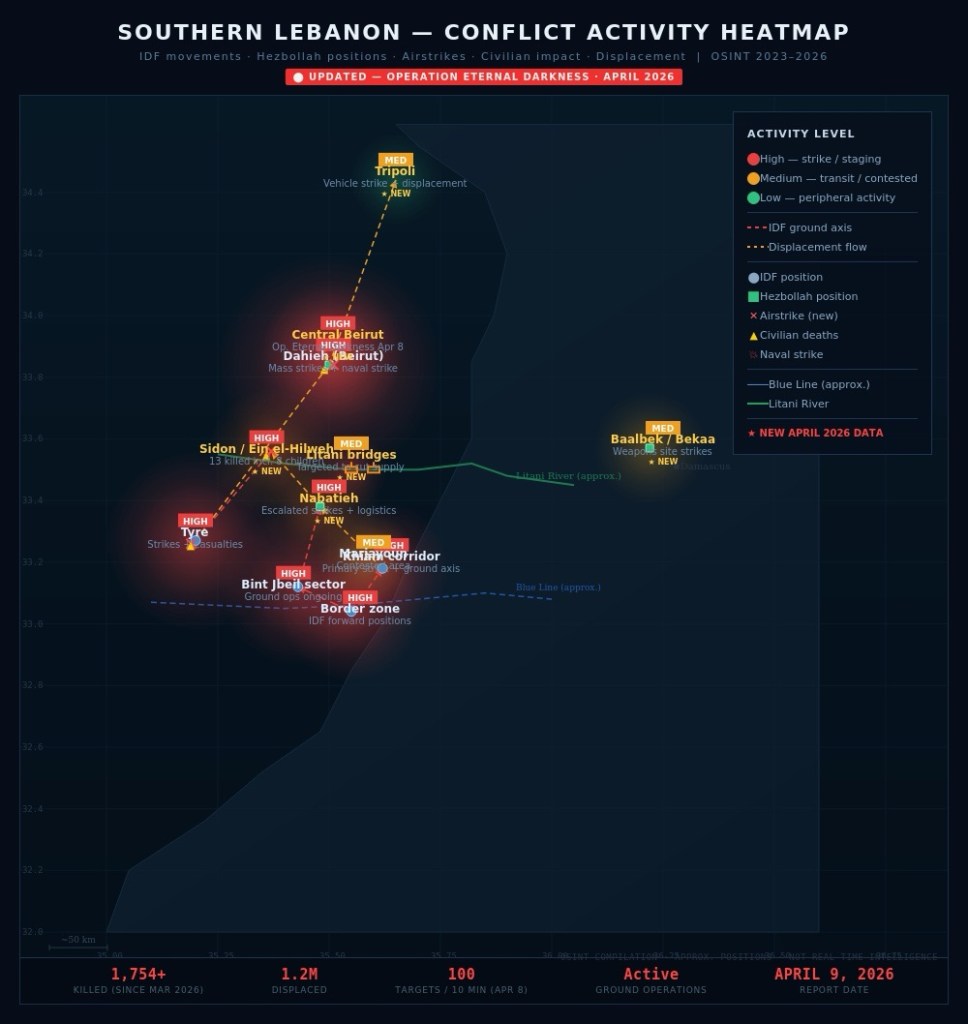
- Israeli airstrikes targeted 100+ sites/locations across Lebanon, including dense urban zones.
- Mass-casualty strike events reported in Beirut
- Hezbollah retaliatory launches toward northern Israel
Ceasefire Status & Contradictions
Key Issue: Scope Ambiguity
- Israel maintains that the ceasefire does not apply to Lebanon
- Iran and mediators assert regional inclusion
- U.S. position remains strategically ambiguous
Ground Reality
- Continued Israeli strikes post-ceasefire announcement
- Iranian warnings regarding withdrawal from the agreement
- Hezbollah signaling a conditional escalation posture
10-Point Ceasefire Framework (Public Elements)
- Immediate halt to U.S.–Iran hostilities
- Two-phase structure (temporary → extended negotiations)
- Reopening of the Strait of Hormuz
- Maritime security guarantees
- Conditional sanctions relief
- Nuclear program limitations
- Release of frozen assets
- Defined negotiation window
- Regional de-escalation expectations (disputed scope)
- Monitoring mechanisms (limited clarity)
Assessment:
The framework lacks enforceable mechanisms and fails to clearly define proxy-theater applicability (e.g., Lebanon).
Humanitarian & Strategic Impact
- Mass civilian displacement across southern and central Lebanon
- Extensive infrastructure degradation
- Elevated civilian casualty risk due to urban strike patterns
- Broader economic implications tied to regional instability and maritime risk
Regional Dynamics
- Lebanon is operating as a parallel conflict theater, not constrained by the Iran ceasefire.
- Israeli operations suggest a continued focus on degrading Hezbollah capabilities.
- Possible establishment of a security buffer zone in southern Lebanon
Comparative Analysis: Ceasefire Patterns
Israel–Iran (2026)
- Formal, internationally brokered
- Undermined by ambiguity and proxy dynamics
Israel–Palestine (Historical Pattern)
- Repeated breakdown cycles
- Weak enforcement and interpretation disputes
Conclusion
Both models demonstrate:
- Weak enforcement structures
- Diverging party interpretations
- Continued military operations despite agreements
Analyst Commentary
Ceasefires in this operational environment function as temporary, politically driven pauses rather than binding constraints. The current situation reflects a continuation of established patterns where:
- Military objectives override diplomatic agreements
- Terms are selectively interpreted
- Proxy theaters remain active regardless of formal agreements
Final Assessment
- Escalation Likelihood: Highly (70%-80%)
- Ceasefire Durability: Low (≤30%)
- Lebanon will remain a primary escalation axis within the broader Iran–Israel conflict structure
Key Sources
- Associated Press – Coverage of Israeli strike scale, casualty figures, and displacement data
- Al Jazeera – Reporting on global reactions, humanitarian impact, and ceasefire scope disputes
- CBS News – Updates on Iranian response and ceasefire tensions
- BBC News – Contextual reporting on regional escalation and diplomatic positioning
- Axios – Analysis of ceasefire ambiguity and U.S. policy stance
- Al Jazeera – Public elements of the reported 10-point ceasefire plan
 The Collective
Leave a comment